Author: Danah Blanco

  • Labyrinth

    labyrinth
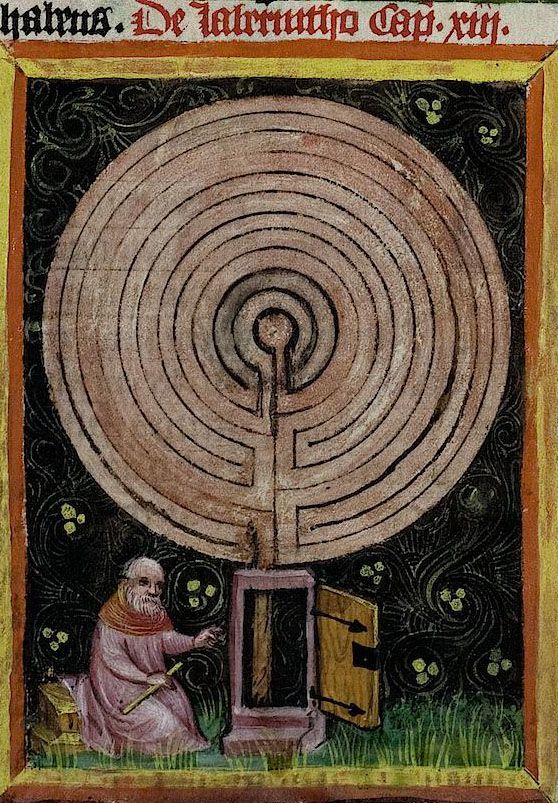
    Labyrinth – Vatican, Biblioteca Apostolica Vaticana, Pal. lat. 291, detail of f. 170v. Rabanus Maurus, De rerum naturis. 1425

    Labyrinths are one of many ancient symbols that has evolved in its meaning. You will certainly be able to search and find a lot of different explanations related to many fields of knowledge.

    In essence, the labyrinth represents a journey. It is a winding path to the centre of our beings, and a path back out into the world.

    For me, it represents life itself; no matter which path we choose, we always have to come to ourselves, know ourselves, before we can integrate all lessons and adapt them into the exterior reality.

    The labyrinth can also be a symbol of the unconscious. The path we take and the monsters we fight in our minds. The fears we have to confront. And learn from. In some mythologies, labyrinths were built with the purpose of luring devils or monsters into them so that they might never escape, or as guardians and protectors of the centre and truth. The Minotaur, the symbol of our deepest fears, of our hidden demons, guarding the labyrinth. The only way out is through the centre. The only way out is by lifting the veil and killing the Minotaur. The only way out is to see clearly.

    Labyrinths are also cosmogonic references to the eternal cycle of birth, death and rebirth. Real labyrinths are used as a tool or initiation into a spiritual practice. In other words, it is another tool we can use to go deeper into the depths of our own psyches. Walking a labyrinth can be a wonderful experience. Slowly, step after step the mind might find a way for distraction, but we bring it back to the present by fully embodying the movement through it. Step by step, moving inwards into the centre, physically and mentally. Breathing. Giving an intention and a purpose to our walking action. That is how meaning is found in every moment; by giving it through our thoughts and actions.

    A labyrinth has no dead-ends as a maze does. It is one path continuously changing perspective. To get out we must always continue forward, ever present to the twists and turns of our journeys to ourselves. Once we have reached the centre, we integrate all lessons and take them out into the world.

    Some studies associate labyrinths to the stars and planets. They portray them as diagrams of the macrocosmos, diagrams of heaven, of the apparent motions of the astral bodies. The terrestrial labyrinth is capable of mirroring the celestial labyrinth. Again we come back to the Hermetic teaching of “as above, so below; as within, so without”, only this time there is an action inherent to the statement as we are the ones who must walk in and through the spiraling path of the labyrinth.

    In the Middle Ages, tracing through the labyrinthic path of a mosaic patterned on the ground was considered a symbolic substitute for a spiritual and holy pilgrimage. That’s why we find them many times in cathedrals.

    For Mircea Eliade and others, the labyrinth’s true purpose is the protection of the centre, which was an initiation into sanctity, immortality and absolute reality, and as such, equivalent to other trials, or mythical symbolisms like the fight with the dragon.

    Labyrinths allude to the neoplatonic idea of “the fall”, the loss of spirit in the process of creation, and the consequent need to seek out the Way through the centre, back to the spirit. In the end, the ultimate goal is union, within oneself, and between oneself and all existence.

  • Shells

    FB_IMG_1512388456651

    Shells have a long history of meanings, symbolism and magical uses. As they are born from the ocean, they are related to water, to our emotions and deeper longings, and therefore also to the Moon, whose energy is always moving the tides. Both the water and the moon give shells a feminine quality to them, a nurturing, soft form of energies.

    In Buddhism, shells represent hearing, listening. For Chinese Buddhism it is one of the 8 emblems of good luck. It is a symbol of light. It accompanies many of the sea deities, like Triton.

    In Christianity it represents salvation, and were used to sprinkle baptismal waters.  They are also worn by Christians to indicate the completion of the pilgrimage to the shrine of Saint James in Galicia, Spain, originally the shrine of the Goddess Bridgette, the Celtic version of Aphrodite.

    The scallop shell is associated with the goddess Venus (“born of the sea”) as she was carried to shore by shell in some of the versions of the myth. In Hindu mythology, the version of Aphrodite is associated to the goddess Lakshmi (“born from the churning of the ocean”), consort of Vishnu, and who represented beauty and good fortune.

    There are therefore many associated symbols to the shell. The feminine. The moon. The tides. Cycles of change. Gods and Goddesses of the ocean, of beauty, of joy. Intuition. Deep search. Diving in the subconscious. Knowing. Wisdom.

    To listen to the sound of the ocean through a shell, or blow a conch shell and listen to the sound, are some of the best experiences to connect with all these deeper meanings. Shells are created by the creatures that inhabit them, and then left behind when no longer needed. This intrinsic wisdom of letting go, of getting rid of the weight that doesn’t serve us in our paths. Nature.

    If you don’t know, taking shells affects the ocean. It can damage the environment and destroy ecosystems. They might serve a purpose there. I always encourage everyone I meet in any beach anywhere to leave everything as they found it or better (by collecting trash), to not take a piece of Nature with them. Everything in Her has meaning and reason to exist within Her. So please, maybe next time think about it before you take shells with you home. Every single action CAN be done with awareness.

  • Luna Llena en Géminis 3/12/2017

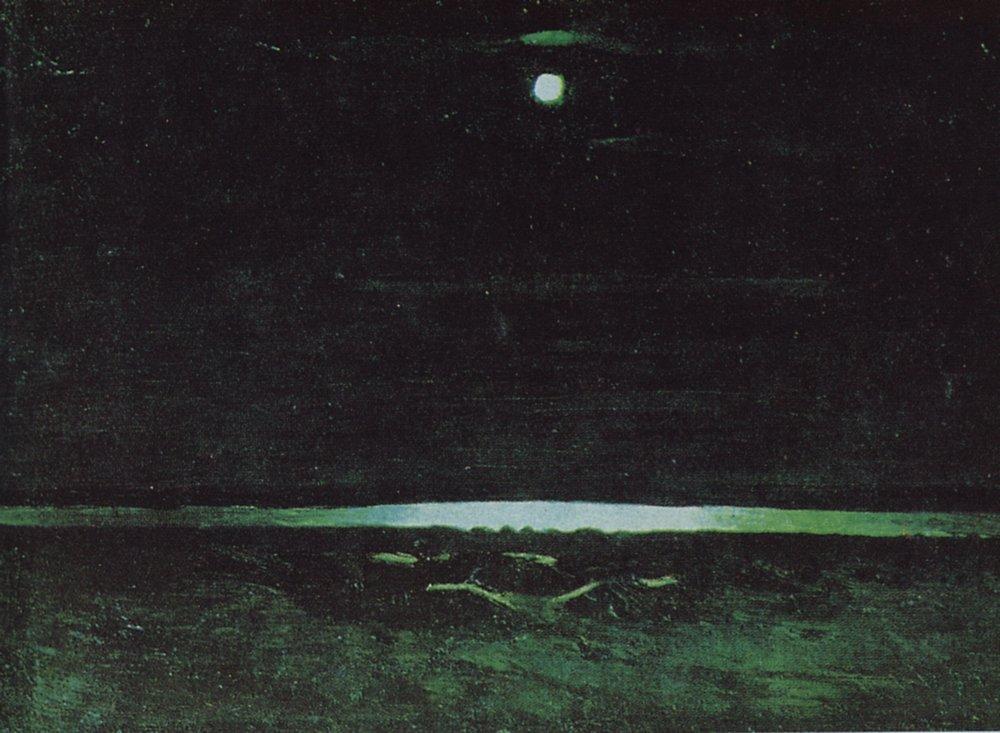
    Arkhip Kuindzhi, “Moonlight Night on the Dnieper,” 1908
    Arkhip Kuindzhi, “Moonlight Night on the Dnieper,” 1908

    La última luna llena del año es este domingo 3 de diciembre en Géminis. El mismo día que Mercurio comienza su última retrogradación del año, hasta el 23 de diciembre. La energía es cambiante y efímera, el tema es la comunicación, el pensamiento, la memoria, las relaciones. Su mensaje es el de relacionarnos de una manera real y honesta con las personas y el mundo que nos rodea.

    Ya sabéis que cuando Mercurio está retrógrado suele afectar a las comunicaciones y a la tecnología en general. Pero no sólo a lo que es externo a nosotros, sino que nos afecta a un nivel físico y emocional, nos ayuda a entablar una conversación en la intimidad de uno mismo.

    El “truco” para navegar estas aguas un poco confusas es ralentizarnos. Pensar las cosas bien antes de hablar o actuar. Ser realistas con las posibilidades, que a pesar de ser infinitas, tenemos que elegir y saber dónde ponemos nuestra energía y esfuerzo. Recordar que lo importante en la vida es vivir los momentos, estar presentes en los instantes que luego son memoria, y que todo lo material al final es sólo una distracción en el camino del autoconocimiento, hacia la verdadera paz y tranquilidad.

    Lo que Mercurio, como buen mensajero divino, quiere que desvelemos es nuestras propias creencias. Nos pregunta si creemos en las mismas cosas. Nos pide que analicemos todo aquello en que basamos nuestras opiniones y actitudes. Que lo miremos con lupa, con honestidad, abriéndonos a la verdad dentro de nosotros mismos. Puede que ya no tengas la misma opinión sobre algo o alguien, y no pasa nada. El cambio es la única constante. El truco es aprender a observarlo y adaptarse.

    Para ser verdaderamente felices, en mi opinión, lo que pensamos, sentimos, creemos, decimos y hacemos deben formar algún tipo de equilibrio. Hay tanto de lo mismo en el mundo hoy en día, todo queriendo ser lo que no es, que ser uno mismo es lo más original que existe. Es una revolución el no adaptarse a ningún molde externo, creado o no por uno mismo.

    De dónde vienen nuestras opiniones y perspectivas? Los pensamientos son nuestros propios, o sólo los pensamos por hábito y automáticamente? Hemos sido manipulados, por nosotros mismos o algo externo, para pensar de cierta manera? Nos gustan las mismas cosas que hace 1 mes, 2 años, o toda una vida? A qué creencias nos aferramos simplemente por no pasar unos minutos al día observando cómo nos sentimos realmente, o qué queremos? Observamos cómo lo que pensamos, sentimos o creemos cambia constantemente? Qué es aquello que no cambia?

    Date permiso para ser quien eres en cada instante. Tienes derecho a cambiar de opinión, de deseos, de sueños, cuando quieras. Puedes empezar de 0 cada día si es lo que deseas. Una página en blanco. El único obstáculo somos nosotros mismos.

    La Luna Llena en Géminis viene cargada de energías de otros planetas y aspectos que ocurren el mismo día, pero en el fondo lo importante es recordar que las lunas llenas son momentos idóneos para soltar lo que no nos sirve, para brillar en la esencia de uno mismo, con toda nuestra perfecta imperfección, la gloria del fluir constante. Es el momento para perdonar si así lo deseamos, o al menos para dejar atrás rencores que sólo nos atrasan en nuestro propio camino.

    La luna brilla e ilumina también algunos aspectos de nosotros mismos que a veces se quedan escondidos o ignorados. Puede que nos sintamos con energía y fuerza para enfrentar todas nuestras creencias limitantes, y al fin dar el paso adelante que tanto ansiamos.

    Os deseo una luna llena mágica. Que nos traiga la fuerza necesaria para estar con uno mismo, para quedarnos a nuestro lado aunque lo externo aún no simule lo interno. Todo con el tiempo vuelve a aparecer e iluminarse para recordarnos a amarnos y aceptarnos.

  • When


    When does the line
    become a blur?
    The limits
    become eternal?
    Or Life becomes Death
    and Death becomes Life? 

  • Mirrors


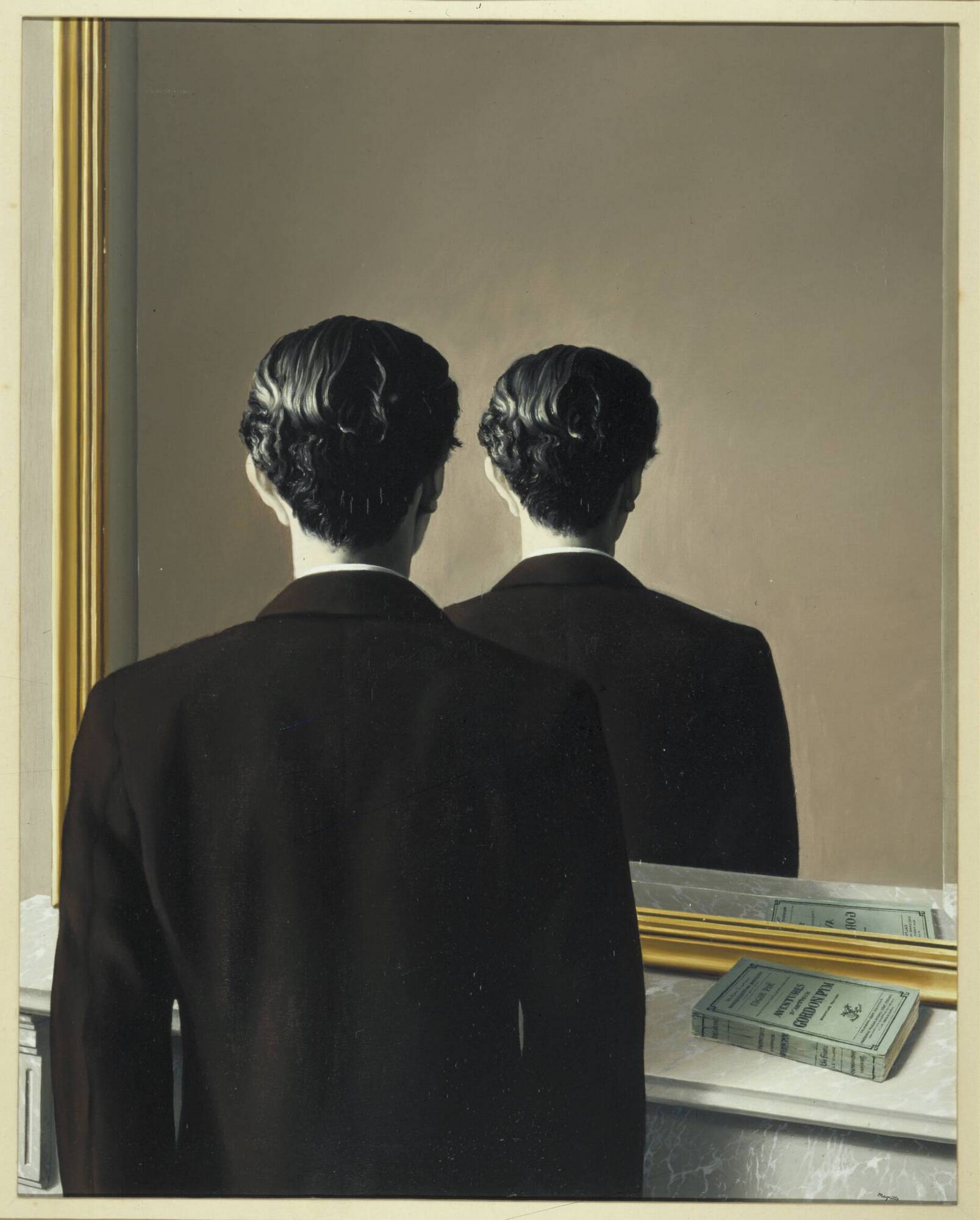
    Art: ‘Not To Be Reproduced’  by René Magritte

    A mirror’s ultimate purpose is to reflect. It’s existence is based merely on what it reflects. It IS what it’s reflection is. Until it’s gone. And then it is a mirror. The essence of mirrors is to be a surface for reflection; the one of looking, and the one of thinking.

    Mirrors for me have always been a doorway to another world. Like the Moon reflects the light of the Sun, so do mirrors reflect our essence. I feel they contain the past, they keep the memory of consciousness protected and hidden, until someone is ready to ‘see’.

    I was going to write a post about Mirrors but I couldn’t resist sharing Cirlot’s explanation of them in ‘A Dictionary of Symbols’:

    Mirror As a symbol, it has the same characteristics as the mirror in fact; the temporal and existential variety of its function provides the explanation of its significance and at the same time the diversity of its meaningful associations. It has been said that it is a symbol of the imagination—or of consciousness—in its capacity to reflect the formal reality of the visible world. It has also been related to thought, in so far as thought—for Scheler and other philosophers—is the instrument of self-contemplation as well as the reflection of the universe. This links mirror-symbolism with water as a reflector and with the Narcissus myth: the cosmos appears as a huge Narcissus regarding his own reflections in the human consciousness. Now, the world, as a state of discontinuity affected by the laws of change and substitution, is the agent which projects this quasinegative, kaleidoscopic image of appearance and disappearance reflected in the mirror. From the earliest times, the mirror has been thought of as ambivalent. It is a surface which reproduces images and in a way contains and absorbs them. In legend and folklore, it is frequently invested with a magic quality—a mere hypertrophic version of its fundamental meaning. In this way it serves to invoke apparitions by conjuring up again the images which it has received at some time in the past, or by annihilating distances when it reflects what was once an object facing it and now is far removed. This fluctuation between the ‘absent’ mirror and the ‘peopled* mirror lends it a kind of phasing, feminine in implication, and hence —like the fan—it is related to moon-symbolism. Further evidence that the mirror is lunar is afforded by its reflecting and passive characteristics, for it receives images as the moon receives the light of the sun. Again, its close relationship to the moon is demonstrated by the fact that among the primitives it was seen as a symbol of the multiplicity of the soul: of its mobility and its ability to adapt itself to those objects which ‘visit’ it and retain its ‘interest’. At times, it takes the mythic form of a door through which the soul may free itself ‘passing’ to the other side: this is an idea reproduced by Lewis Carroll in Alice Through the Looking Glass. This alone is sufficient explanation of the custom of covering up mirrors or turning them to face the wall on certain occasions, in particular when someone in the house dies. All that we have said so far by no means exhausts the complex symbolism of the mirror: like the echo, it stands for twins (thesis and antithesis), and specifically for the sea of flames (or life as an infirmity). For Loeffler, mirrors are magic symbols for unconscious memories (comparable with crystal palaces). Hand-mirrors, in particular, are emblems of truth, and in China they are supposed to have an allegorical function as aids to conjugal happiness as well as a protection against diabolical influences. Some Chinese legends tell of ‘the animals in the mirror’.